
Your first goal
n in Goals asks for a title and what you want, then walks the new goal through six steps before any work starts:
Plan, Panel, Done looks like, Split, How careful and Go. The rail on the left shows where you
are: a check on the steps done, a ring on the one you are on. H and L go back and forth between the steps you
reached, ⌘↩ moves on. The wizard is a part of the Goals overview, and the line over it says so: Goals › your goal › the step.
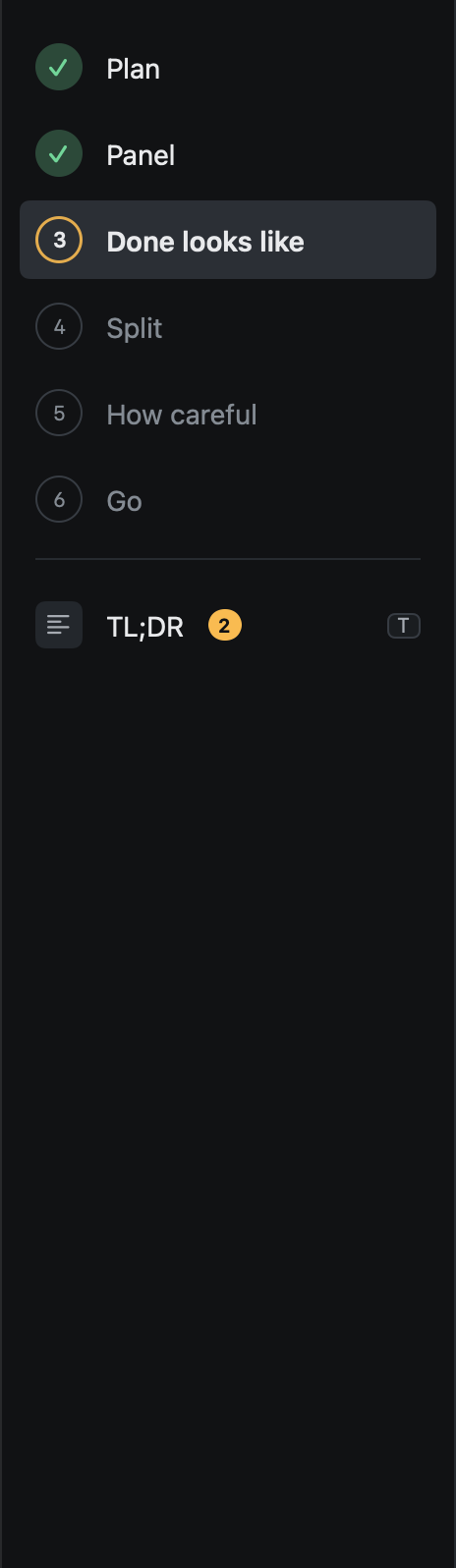
⎋ (or a click on Goals in that line) goes back to the Goals list, and the status bar always shows it as
⎋ goals. Leaving keeps the wizard's place: ↩ on the goal in the list, or :goal.wizard, comes back to where you
were. :goal.wizard also walks a goal you made another way. Inside a chat with a persona, the invite picker or the
TL;DR, ⎋ closes that first, and the status bar says so.
D discards the goal from any step, and asks first, saying what will happen:
- A goal with nothing attached (no sessions, chats or PRs, no swarm, no GitHub issue, and Go was never pressed) is
deleted for good: the goal, its wizard and its
GOAL.md. - Any other goal is archived, and
abrings it back in the Goals list.
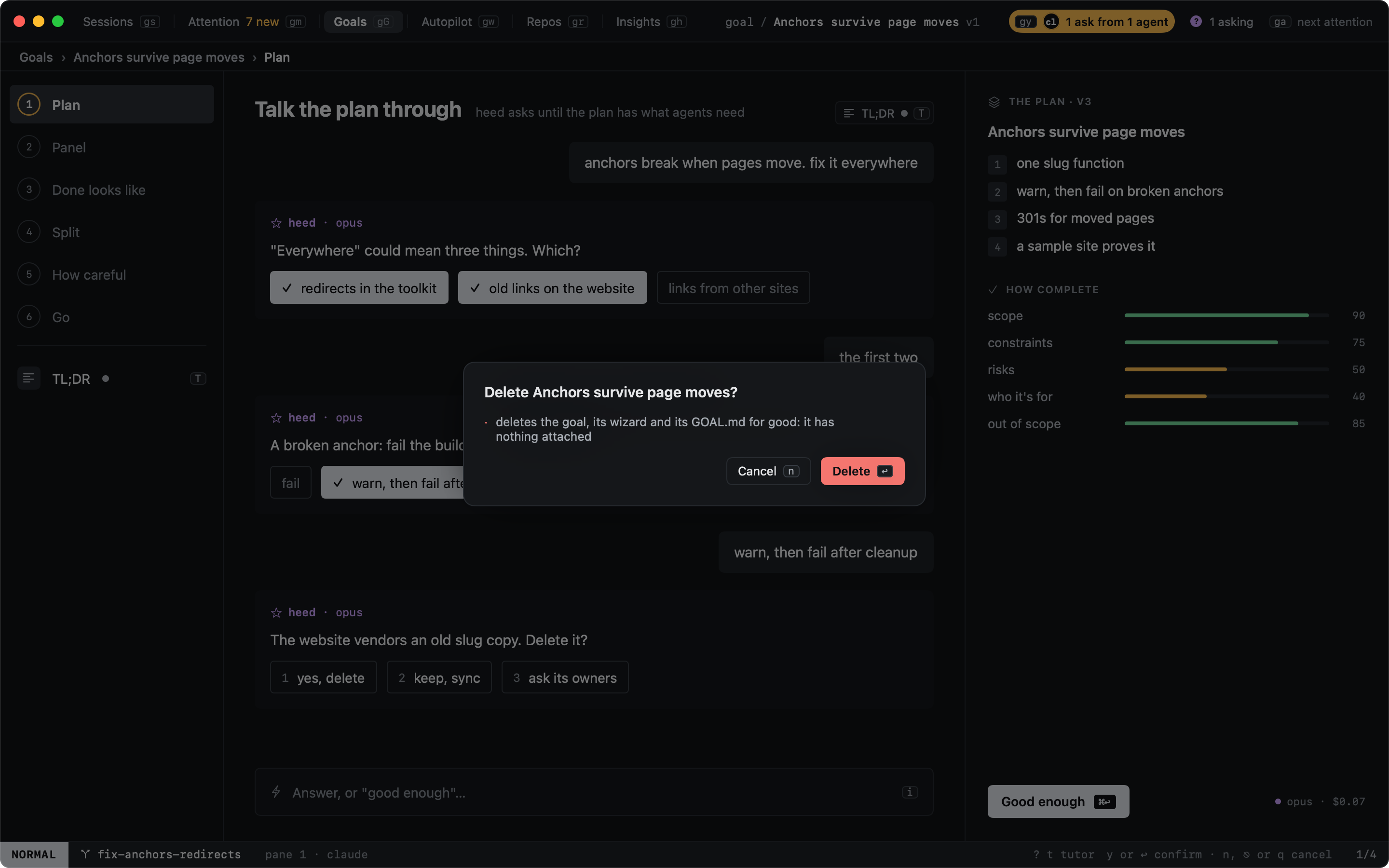
The same is in the right-click menu on the wizard and in the Goal menu of the menu bar. x on the Panel step is the
other way out: it archives with a reason.
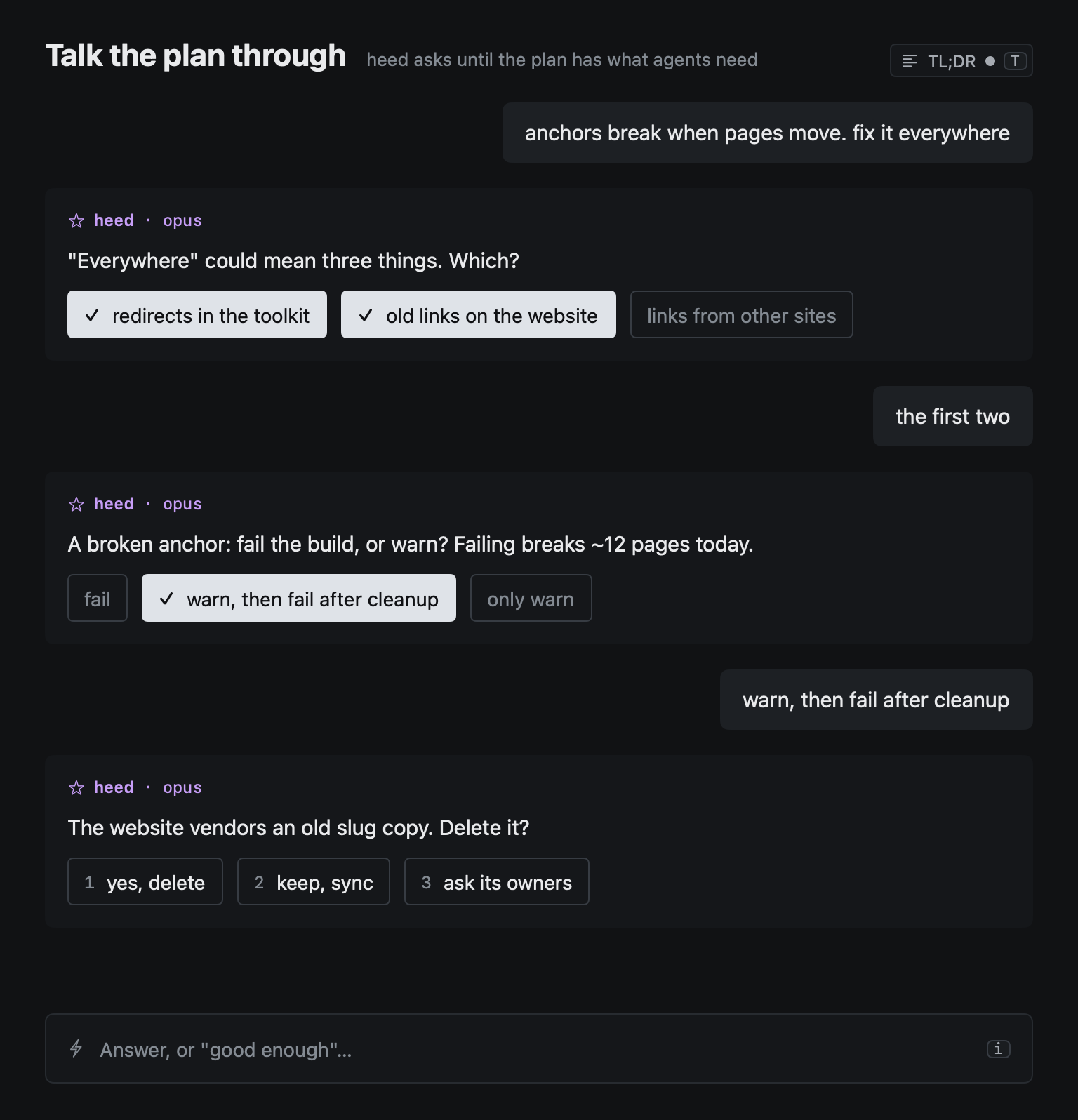
heed asks until the plan has what agents need, one question at a time. Each question comes with options: 1, 2 or
3 picks one, i types your own answer (and "good enough" in it moves on). The questions come from your default
agent on its strongest model (opus for Claude), run headless and read-only in the goal's repos, so it can look at the
code before it asks: the worktrees of the sessions on the goal, and any repo you name in what you write. It may read
and search them; it cannot change a file, and nothing is kept in the agent's own history. A repo it could not read
means it plans from your words alone.
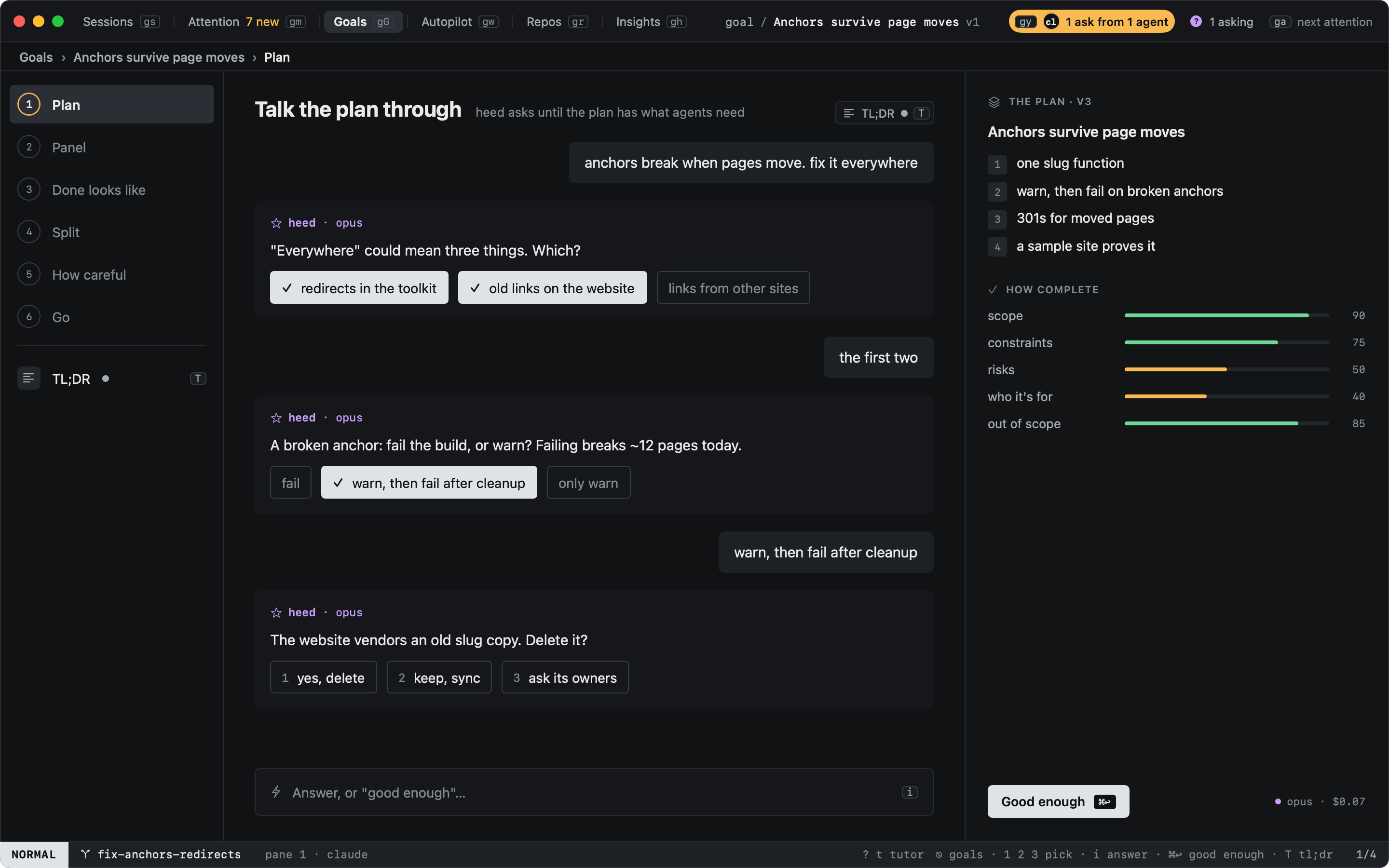
On the right, the plan builds up. Every version is saved as a new version of the goal's GOAL.md too: the summary
as the goal, the out-of-scope list as Not the goal, your decisions in Decisions, and the steps, constraints,
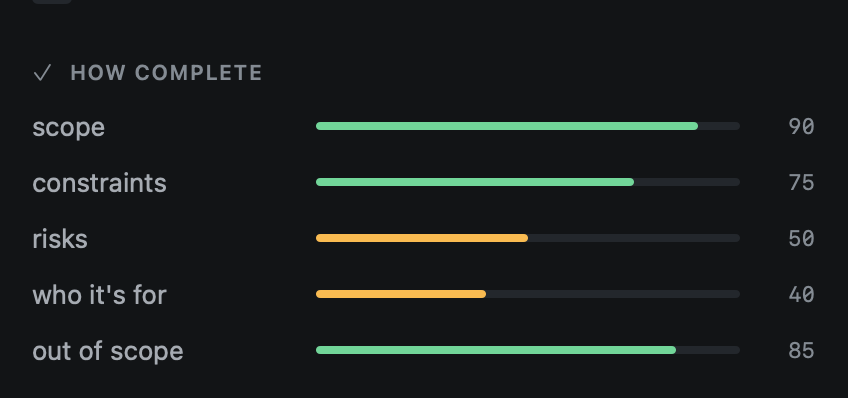
risks and who it is for in sections of their own. Under it, five meters say how complete the plan is: scope,
constraints, risks, who it's for and out of scope, each scored by a cheap model after every answer. heed says when it
thinks the plan is complete enough; Good enough (⌘↩) moves on whenever you like.
The line at the bottom right says what the step's calls cost so far, as the agents reported it; ≈ when part of it
is an estimate or unknown.
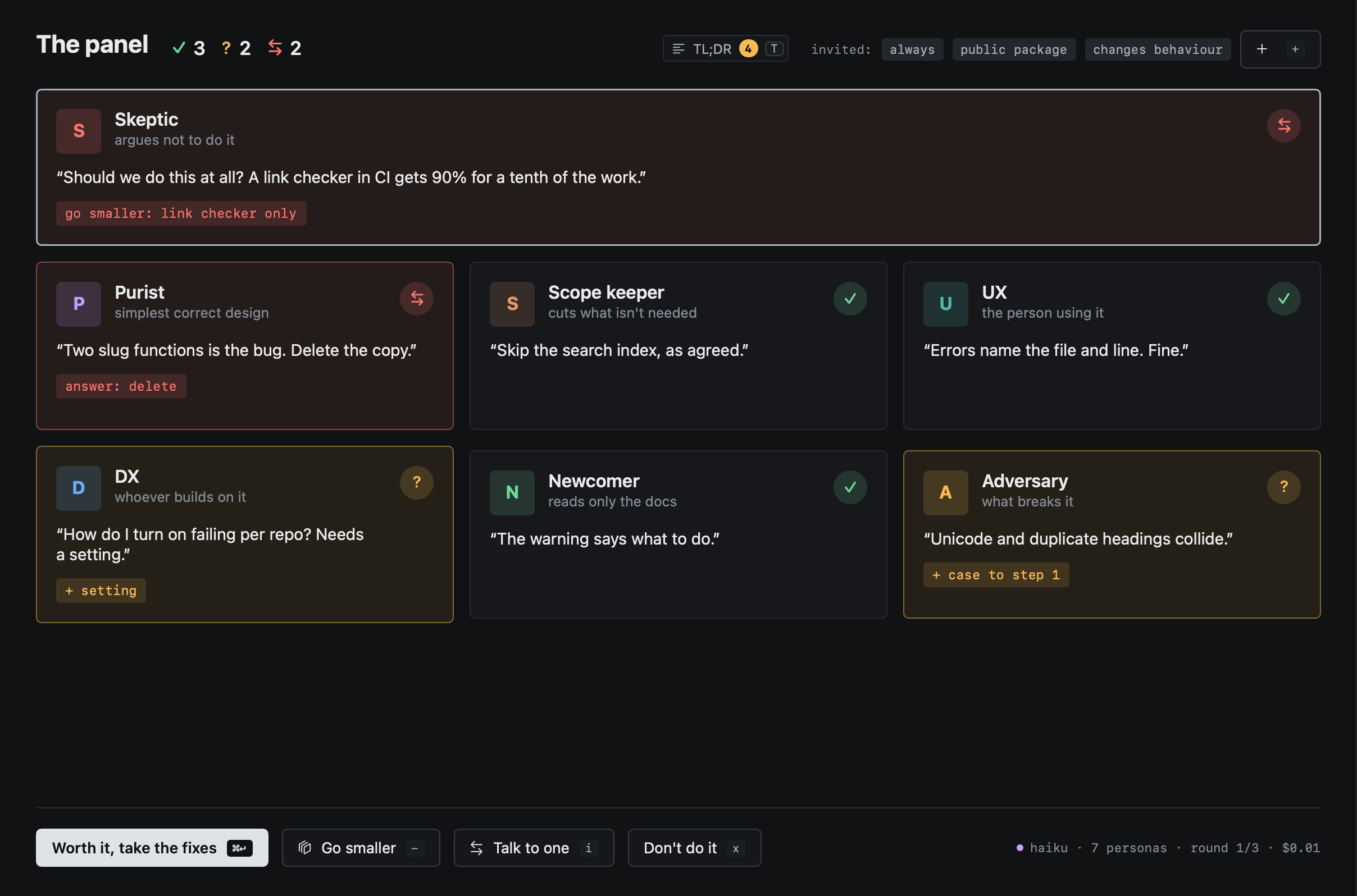
A panel of personas reads the plan, each in its own voice, and says happy, concern or not, with one quote and, unless happy, one fix. Four always sit: the Skeptic, who argues not to do it at all (or much smaller), the Purist, the Scope keeper and UX. Others are invited by what the goal touches, read from the plan's words, and the chips at the top say why:
| The goal touches | Who is invited |
|---|---|
| a public package, an SDK, a CLI | DX and Newcomer |
| behaviour or parsing (a format, a default, a migration) | Adversary |
| a service (a deploy, a queue, a database) | Operator |
| a UI | Accessibility |
| auth or the network | Security |
| a hot path (latency, throughput, a cache) | Performance |
| your team's style, once a library persona named "team style" exists | that persona |
+ invites another: the built-in personas not on the panel, and the ones in your persona library. A cheap model
reads for the whole panel in one call.
Then, for up to three rounds:
| Key | |
|---|---|
⌘↩ |
Worth it, take the fixes: the fixes go into the plan (a new version, in GOAL.md too) and the panel reads it again. With no fixes left, or after the third round, it moves on. |
- |
Go smaller: the plan is cut to what gets most of the value, the rest moves out of scope, and the panel reads again. |
i |
Talk to one: a chat with the persona under the cursor (j k move); ⎋ closes it. |
x |
Don't do it: type why (the Skeptic's words to start from); the reason goes into GOAL.md's decisions and the goal is archived. |
From the agreed plan, heed drafts what done looks like: a statement and the criteria, each with how it is checked: a test, a CI step, a command, or nothing yet. The meter on each row says how surely an agent can tell it is met: a real check fills it, a proposed one (a test that does not exist yet) half, and a line nothing checks is empty, or nearly, when its words cannot be checked ("fast", "nice", "robust" without a number).
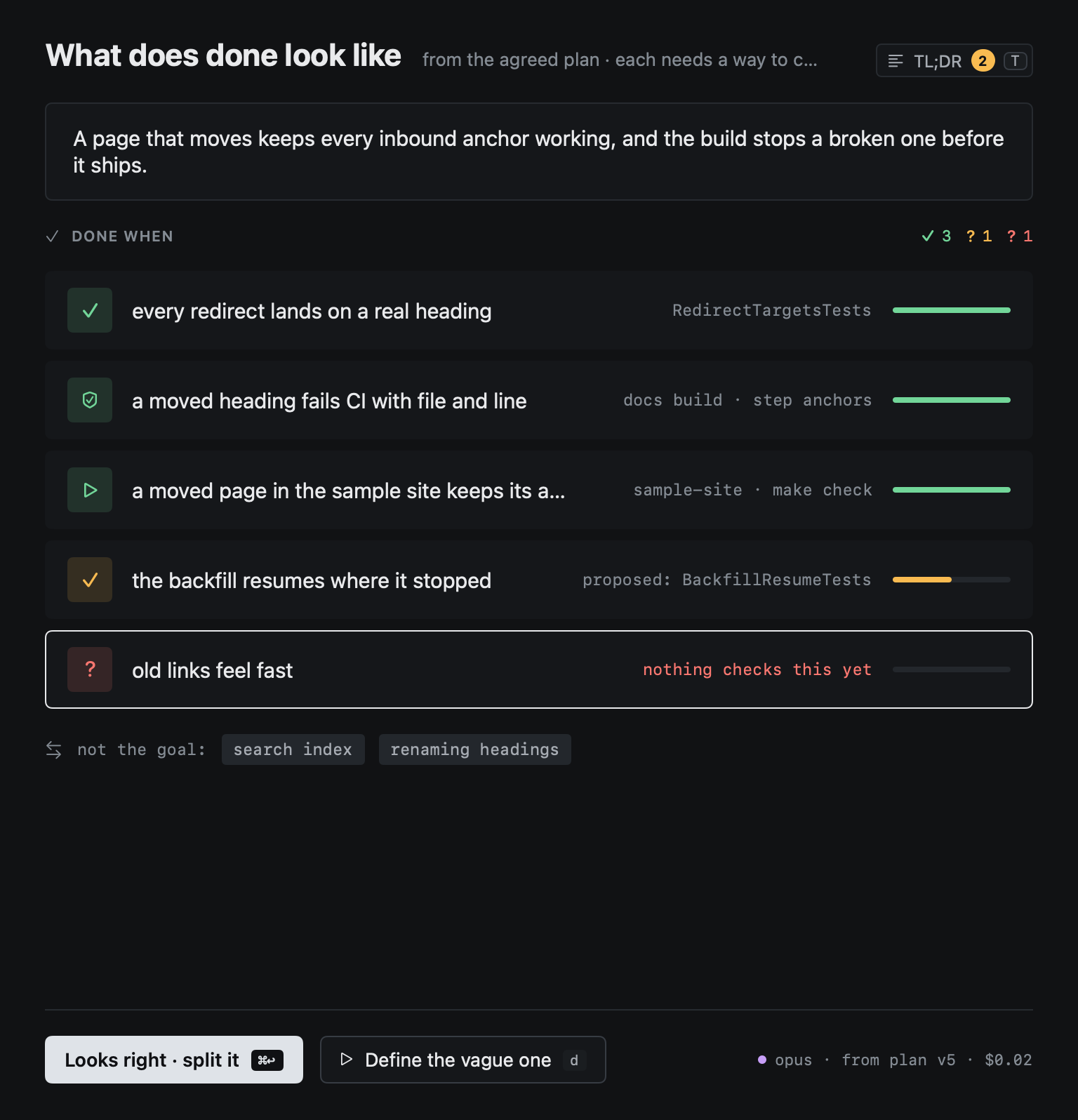
A criterion nothing checks gets measurable replacements on the right: 1 2 3 highlight one, ↩ uses it ("drop
it" drops the criterion). d defines it with an agent: the same read-only agent as in Plan reads the repos and
proposes checks it could run, which join the list. Looks right (⌘↩) writes the criteria into GOAL.md's
Done when, each with its check after it, as (check: test RedirectTargetsTests).
The plan's parts on your agents, by fit and what they have left, with the lead's moves on top: see
Split it across your agents. ⌘↩ moves on.
Quick, Standard or Thorough: what has to pass before a part merges, on the goal's own reviewers, evaluations and
merge rules. heed suggests one and says why; 1 2 3 pick, Q shows the details. See
How careful, and Go.
Who works (helpers, sessions or a mix), how many at once, when you are asked, the budget and who merges, each with a
default, and what that comes to. ⌘↩ starts it as the goal's swarm, and the goal opens on
its page; S saves it to start later.
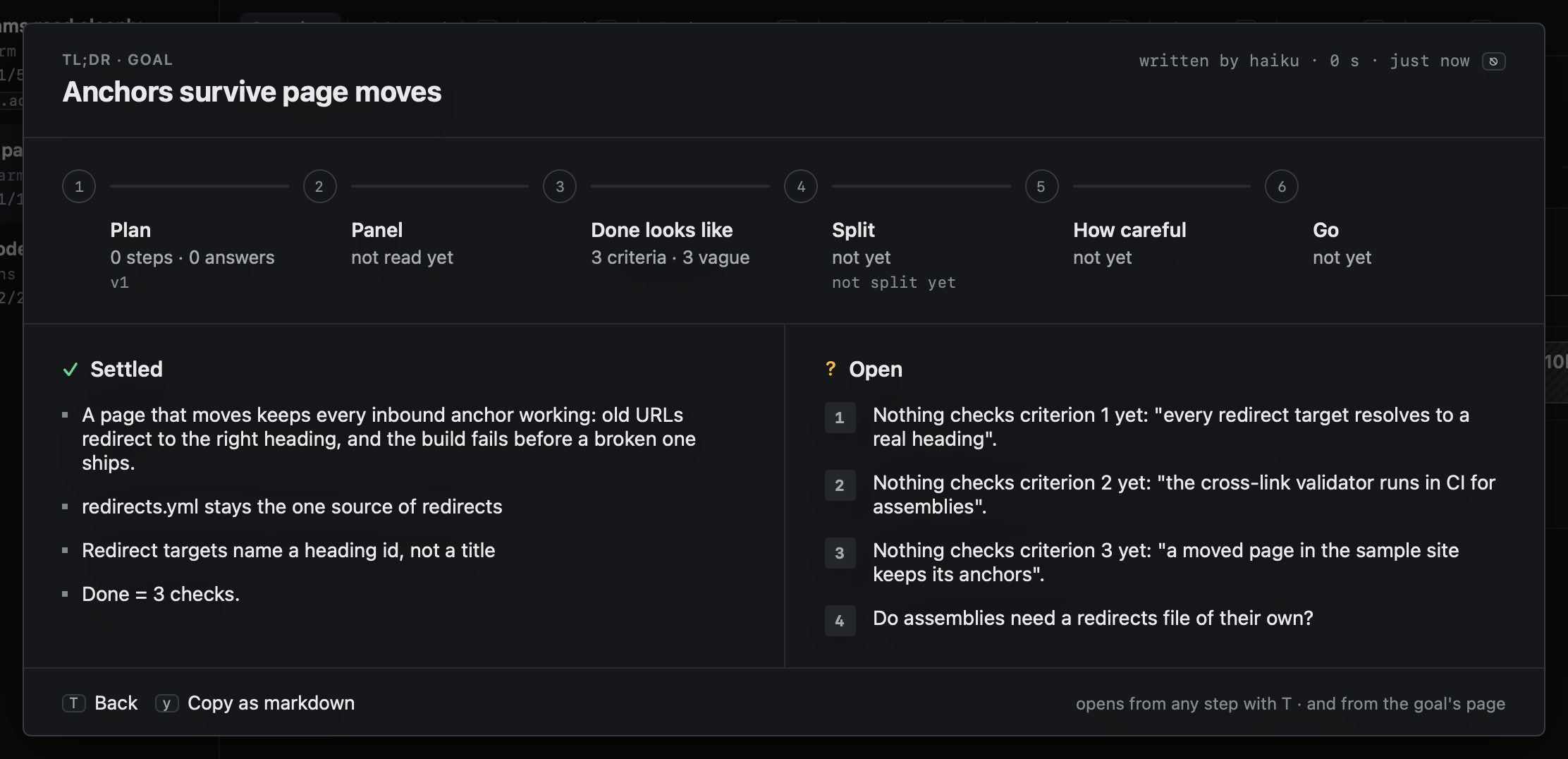
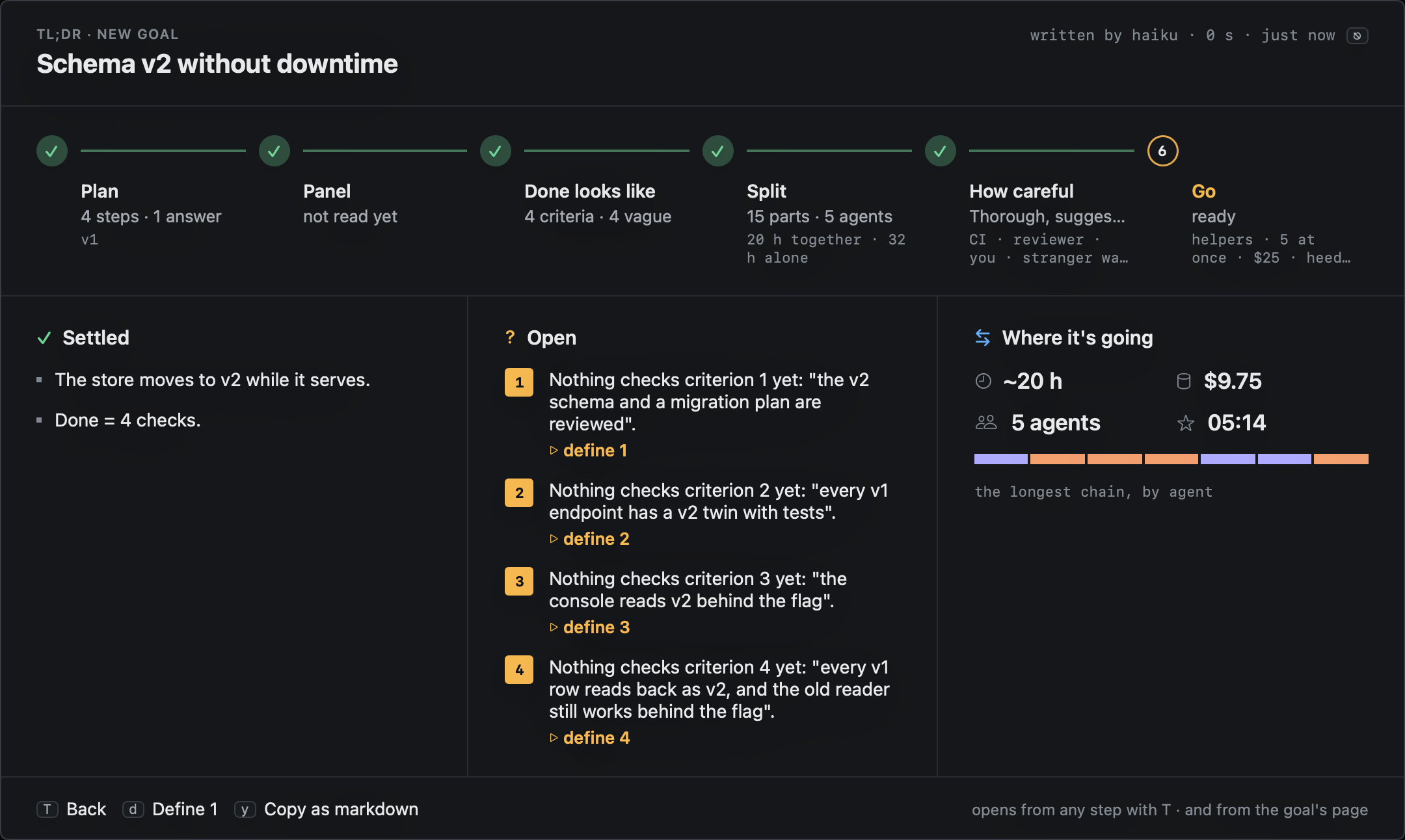
Once there is something to summarise (the wizard's first plan, or a goal that says what it is), a TL;DR entry
sits under the rail's steps and a TL;DR chip beside each step's title and the goal's title on its page. When it
has news since you last opened it (a step finished, a new open point), the entry shows how many points are open, amber
when one of them needs you, or a dot when none is open. A click, or T on any step of the wizard and on a goal's
page, opens the goal's TL;DR: each
step with a summary, what is settled, and what is still open, numbered, each with what to do about it. d
does the first open point (define a vague criterion, back to the panel), y copies the whole TL;DR as markdown, and
T or ⎋ closes it. A cheap model writes it from heed's facts; it is written again only when something it was
written from changed, and until it is, heed's own words show.
Plan's questions run on your strongest model, one headless run per question, and say what each cost. Everything else is heed's model calls on the cheap model: the meters after each answer, the panel's read (one call per round), the fixes, the criteria, the replacements and the TL;DR. In the tutor and the docs' pictures nothing is called: the answers are scripted.